
Car Registration Documents — Kansas
Free to compare
What Kansas Requires at Registration
Kansas will not register your car without proof of insurance that meets state minimum liability limits: $25,000 bodily injury per person, $50,000 per accident, and $25,000 property damage. The state also mandates personal injury protection and uninsured motorist coverage, and the DMV verifies all three before issuing plates. If your insurance card does not list these coverages explicitly, the clerk will send you back to your carrier for updated proof.
Beyond insurance, Kansas requires the vehicle title (signed by the seller if you bought it from a private party), a completed vehicle identification number inspection (form TR-54A), an odometer disclosure statement, and payment for registration fees. Out-of-state titles must be surrendered; Kansas issues a new title as part of the registration process. If you're registering a newly purchased car, bring the bill of sale and any lien release if the previous owner paid off a loan.
“Kansas will reject your registration if the insurance proof does not explicitly list personal injury protection and uninsured motorist coverage.”

Find Coverage That Keeps You Legal in Kansas
Get My Kansas Car Insurance Quote$25,000 / $50,000 / $25,000
Kansas Minimum Liability Limits
Kansas law requires every registered vehicle to carry at least $25,000 bodily injury per person, $50,000 per accident, and $25,000 property damage. Personal injury protection and uninsured motorist coverage are also mandatory.
Kansas Department of Revenue, Division of Vehicles
Insurance Proof Kansas Accepts
Kansas accepts an insurance card issued by your carrier, an electronic proof-of-insurance display on your phone, or a letter from your insurance company on company letterhead. The document must show your name, the vehicle identification number, the policy number, the effective date, and the coverage limits for liability, personal injury protection, and uninsured motorist. Generic declarations pages that list multiple vehicles work only if the VIN you're registering appears on the page.
If you just bought the car and added it to an existing policy, call your carrier before heading to the DMV and request updated proof that includes the new vehicle. Many carriers email updated cards within minutes, but some mail them, and Kansas will not accept a card that does not list the VIN you're registering. If you're registering multiple household vehicles on the same trip, bring separate proof for each VIN or a single document that lists all of them.
Kansas does not accept expired insurance cards, even if your policy renewed and the coverage is continuous. The effective date on the card must overlap with the registration date. If your card expired last month but your policy auto-renewed, request a current card before you go.

Kansas will reject your registration application if the insurance proof does not explicitly list personal injury protection and uninsured motorist coverage, even if your liability limits are correct.


Odometer Disclosure and Bill of Sale
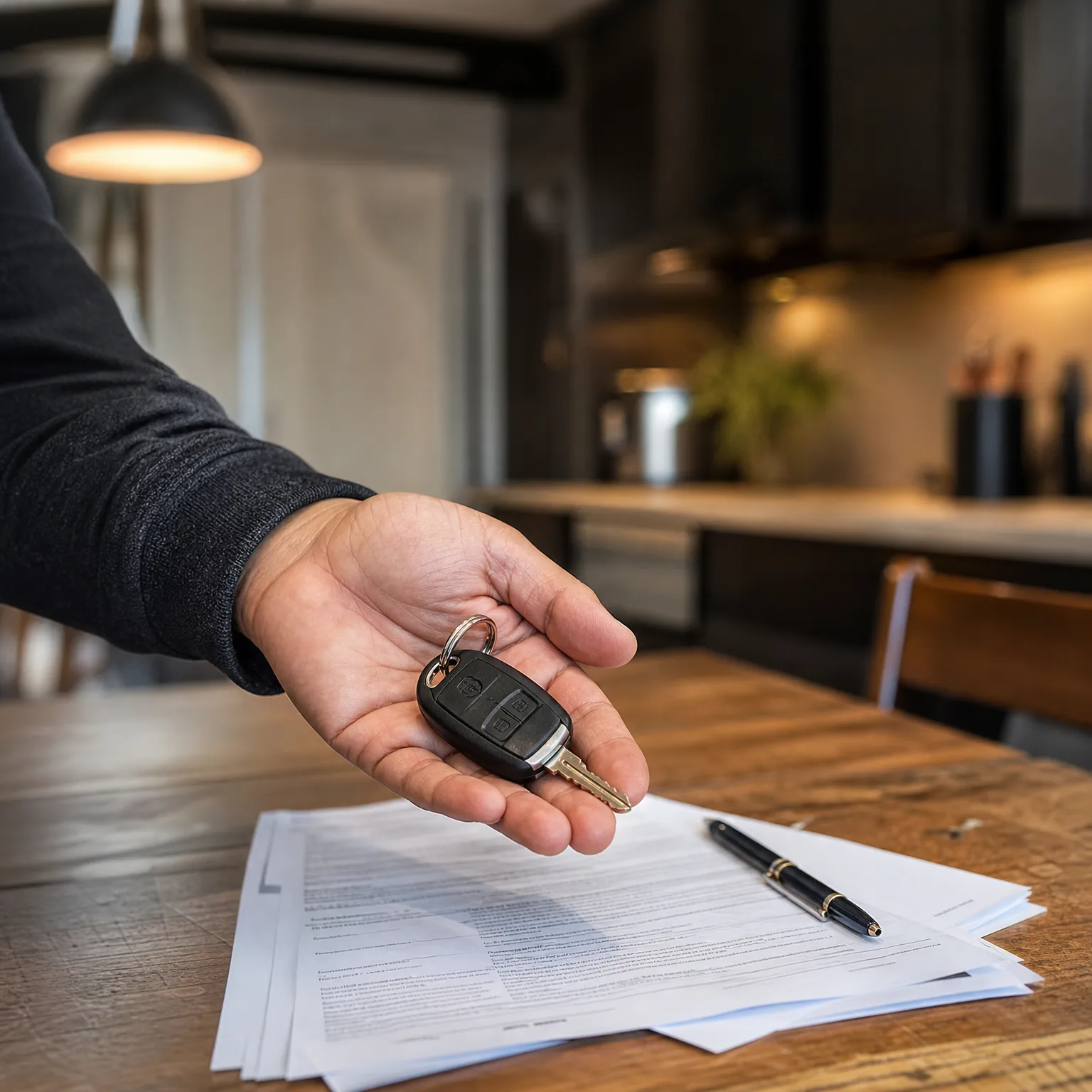
Kansas requires an odometer disclosure statement for any vehicle less than ten years old. The disclosure is usually printed on the back of the title in a separate section below the assignment block. The seller fills in the odometer reading and signs; the buyer signs to acknowledge it. If the title does not have a built-in odometer section, Kansas accepts a separate odometer disclosure form (available at any county treasurer's office or downloadable from the Kansas Department of Revenue website).
A bill of sale is not legally required for registration, but Kansas county treasurers often request one to verify the purchase price for sales tax calculation. The bill of sale should list the buyer's name, the seller's name, the VIN, the make and model, the sale date, and the purchase price. Both parties should sign it. If you did not get a bill of sale from the seller, write one yourself and have the seller sign it before you leave with the car. Kansas calculates sales tax on the purchase price or the book value, whichever is higher, so an unsigned or missing bill of sale will not reduce your tax—it will just slow down the process at the counter.
If the car was a gift, Kansas requires a separate gift affidavit (form TR-313) signed by the person who gave you the car. The affidavit exempts you from sales tax but does not exempt you from title and registration fees.
12%
Kansas Uninsured Motorist Rate
Twelve percent of Kansas drivers operate without insurance, which is why the state mandates uninsured motorist coverage on every registered vehicle. The DMV will not register a car unless the insurance proof explicitly lists this coverage.
Insurance Research Council, 2023

Out-of-State Titles and New Residents
If you moved to Kansas from another state, you have 60 days from the date you establish residency to register your car. Kansas defines residency as the date you start working in Kansas, enroll your children in a Kansas school, or register to vote. The 60-day window starts from whichever comes first, not from the date you physically move. If you miss the 60-day deadline, Kansas assesses a late registration penalty.
Bring your out-of-state title, proof of Kansas insurance, and a completed VIN inspection to the county treasurer's office. Kansas will surrender your old title to your previous state and issue a new Kansas title. If your out-of-state title has a lien, Kansas will note the lien on the new title and notify the lender. You do not need to pay off the loan before registering in Kansas, but you do need a letter from the lender authorizing the title transfer if the lender's name appears on the title as the legal owner.
Registration Fees and Payment
Kansas registration fees vary by vehicle weight, age, and county of residence.
What to Do Before You Go
Call your insurance carrier and confirm that your proof of insurance lists the VIN you're registering and explicitly names personal injury protection and uninsured motorist coverage. If you just added the car to your policy, request an updated card that includes the new vehicle. Schedule a VIN inspection with your county sheriff's office or a Kansas highway patrol station if you have not completed one yet—most locations accept walk-ins during business hours, but calling ahead saves a wasted trip if the inspector is out.
Gather your title, bill of sale, odometer disclosure, and any lien release letters. If the title is from another state, confirm that the seller signed the assignment section and that the odometer reading is filled in. If you're registering multiple vehicles, bring separate proof of insurance for each VIN or a single document that lists all of them. Kansas processes registration at the county treasurer's office, not the DMV, so locate your county treasurer's office address and hours before you leave. Most offices close by 4:30 p.m. and are not open on weekends.
Title and VIN Inspection Requirements
The title must be signed by the seller in the assignment section on the back. If you bought the car from a dealer, the dealer should have provided a reassignment form or a manufacturer's certificate of origin for a new car. If you bought from a private party, the seller's signature must match the name on the front of the title, and the odometer reading must be filled in. Kansas does not accept titles with whited-out sections, crossed-out names, or unsigned assignment blocks. If the title has a lien listed, bring the lien release letter from the lender.
The VIN inspection (form TR-54A) must be completed by a Kansas law enforcement officer, a licensed Kansas vehicle dealer, or a Kansas-certified VIN inspector. The inspection verifies that the VIN on the dashboard matches the VIN on the title and that the car has not been reported stolen. Most county sheriff's offices and highway patrol stations perform VIN inspections for free during business hours. Bring the title with you to the inspection so the officer can compare the numbers. The inspection form is valid for 60 days, so if you're not ready to register immediately, you can complete the inspection early.
Get Your Free Quote
Get My Kansas Car Insurance QuoteFrequently Asked Questions
Can I register a car in Kansas without insurance?
No. Kansas requires proof of liability insurance, personal injury protection, and uninsured motorist coverage before the county treasurer will process your registration application. The insurance must meet state minimum limits: $25,000 bodily injury per person, $50,000 per accident, and $25,000 property damage.
Does Kansas accept electronic proof of insurance for registration?
Yes. Kansas accepts an insurance card displayed on your phone, a printed card from your carrier, or a letter on company letterhead. The document must show your name, the VIN, the policy number, the effective date, and coverage limits for liability, personal injury protection, and uninsured motorist.
Where do I get a VIN inspection in Kansas?
Kansas law enforcement officers, licensed Kansas vehicle dealers, and Kansas-certified VIN inspectors can complete form TR-54A. Most county sheriff's offices and Kansas highway patrol stations perform VIN inspections for free during business hours. Bring the vehicle title so the inspector can verify the VIN matches.
How long is a Kansas VIN inspection valid?
A completed TR-54A form is valid for 60 days from the inspection date. If you complete the inspection but are not ready to register the car immediately, you can use the same form as long as you register within 60 days.
What happens if my out-of-state title has a lien?
Kansas will note the lien on your new Kansas title and notify the lender. You do not need to pay off the loan before registering, but if the lender's name appears as the legal owner on the title, bring a letter from the lender authorizing the title transfer.
Do I need a bill of sale to register a car in Kansas?
Kansas does not legally require a bill of sale for registration, but county treasurers often request one to verify the purchase price for sales tax calculation. The bill of sale should list both parties' names, the VIN, the sale date, and the purchase price, and both parties should sign it.