
Minimum vs Full Coverage — Kansas
Free to compare
What You're Actually Comparing
You're looking at two different policy structures for your Kansas vehicles. Minimum coverage means you carry the state's required liability limits — $25,000 per person for bodily injury, $50,000 per accident, and $25,000 for property damage — plus the mandatory personal injury protection and uninsured motorist coverage Kansas law requires. That package protects others when you cause an accident, and it protects you when an uninsured driver hits you. It does not pay to repair or replace your own vehicles.
Full coverage adds collision and comprehensive to that liability base. Collision pays to repair your car after an accident regardless of fault. Comprehensive pays for theft, hail, vandalism, hitting a deer, and other non-collision damage. Both coverages come with a deductible you choose — typically $500 or $1,000 — and both pay up to your vehicle's actual cash value at the time of loss. When you insure multiple vehicles, every car on the policy can carry a different combination: one with full coverage, another with minimum only.
“Minimum coverage protects others and covers your medical expenses, but your vehicles are unprotected against physical damage.”

Find Coverage That Keeps You Legal in Kansas
Get My Kansas Car Insurance Quote$25,000/$50,000/$25,000
Kansas Minimum Liability Limits
Kansas Statutes Annotated require every driver to carry at least $25,000 per person for bodily injury, $50,000 per accident, and $25,000 for property damage. Personal injury protection and uninsured motorist coverage are also mandatory.
Kansas Department of Revenue, Division of Vehicles
What Minimum Coverage Actually Protects
Kansas minimum liability covers the other driver's medical bills and property damage when you cause an accident, up to the policy limits. If you injure one person, your policy pays up to $25,000 for their medical expenses. If you injure multiple people in one accident, the policy pays up to $50,000 total. If you damage someone's vehicle or property, the policy pays up to $25,000.
The mandatory personal injury protection coverage pays your own medical expenses and lost wages after an accident, regardless of fault, up to the limits you select. The mandatory uninsured motorist coverage pays your medical bills and lost wages when an uninsured or underinsured driver hits you. Both coverages protect you and your passengers.
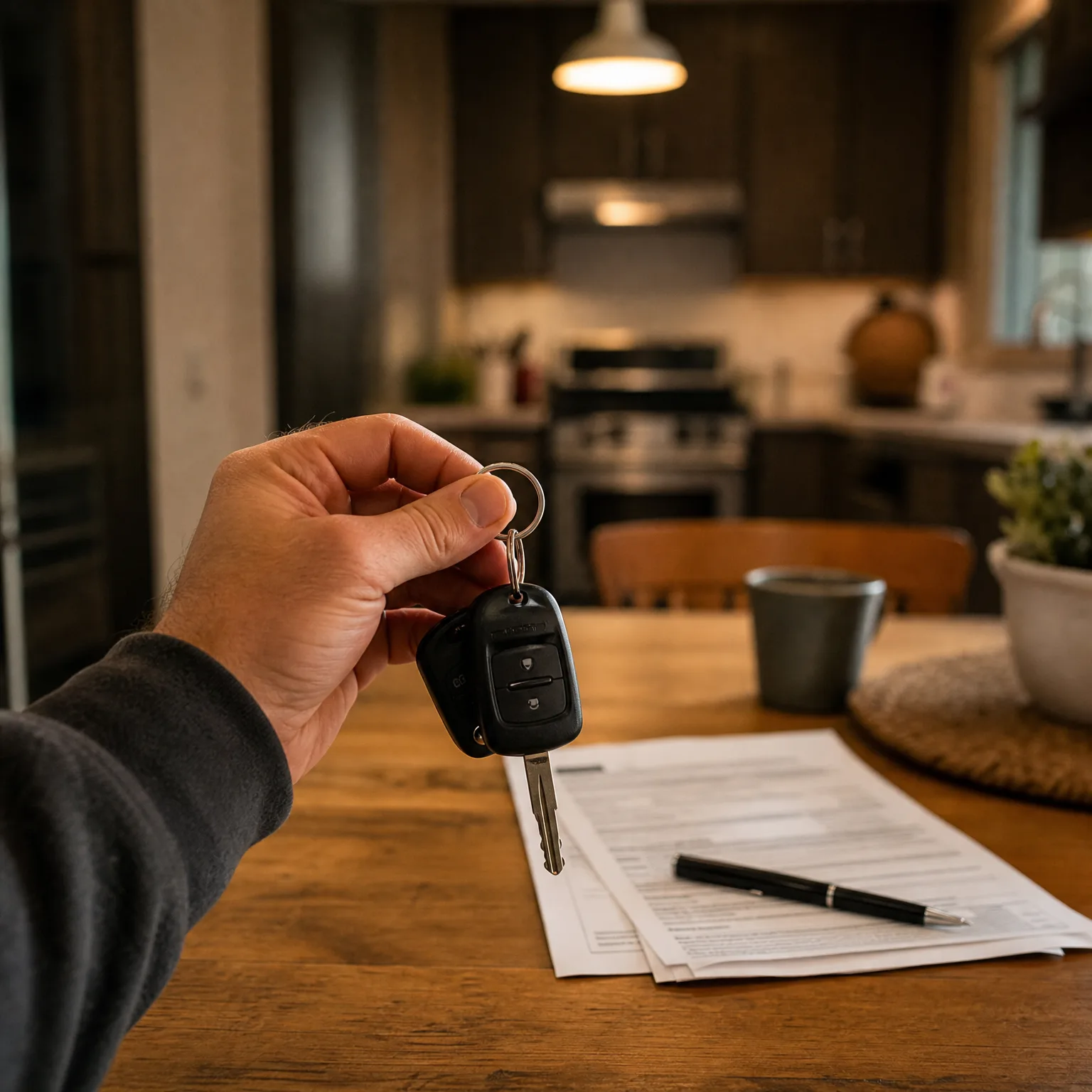
What minimum coverage does not do: it does not pay to repair or replace your own vehicles after an accident, theft, or other damage. If you total your car in an at-fault accident, you pay to replace it. If someone steals your car, you absorb the loss. If hail dents every panel, you pay for repairs or drive it dented. Minimum coverage protects others and covers your medical expenses, but your vehicles are unprotected.

Minimum coverage leaves every vehicle on your policy unprotected against physical damage. If you cannot afford to replace a totaled car out-of-pocket, minimum coverage is the wrong choice for that vehicle.





How Adding Coverage Re-Rates Your Policy
When you add collision and comprehensive to one vehicle on a multi-car policy, the carrier re-rates the entire policy. The new premium reflects every vehicle's coverage level, value, garaging location, and the drivers assigned to each car. A household with three vehicles might carry full coverage on two newer cars and minimum coverage on an older third vehicle. The premium for the two full-coverage cars is not simply the minimum-coverage base plus a flat collision-and-comprehensive add-on — it is a new calculation that considers the total risk profile.
Carriers calculate collision and comprehensive premiums based on the vehicle's actual cash value, the deductible you choose, your garaging zip code, and your driving record. A $1,000 deductible costs less than a $500 deductible because you absorb more of each claim. A vehicle garaged in a zip code with high theft or hail frequency costs more to insure for comprehensive. A driver with an at-fault accident on record pays more for collision.
When you request quotes, specify which vehicles you want to cover fully and which you want to insure at minimum. Carriers that write multi-vehicle policies in Kansas include State Farm, Geico, Progressive, Allstate, Farmers, American Family, and others. Compare the total policy premium across carriers, not just the per-vehicle breakdown, because multi-car discounts and base-rate structures vary.
12%
Kansas Uninsured Motorist Rate
Twelve percent of Kansas drivers carry no insurance, which makes uninsured motorist coverage — mandatory in Kansas — critical protection when another driver causes an accident and cannot pay.
Insurance Research Council, 2023

Structuring Coverage Across Your Vehicles
A common structure for Kansas households with multiple vehicles: full coverage on financed or newer vehicles, minimum coverage on older paid-off vehicles. This approach protects the assets you cannot afford to lose while avoiding unnecessary premiums on vehicles you can replace in cash. Every vehicle on the policy must carry at least Kansas minimum liability, PIP, and uninsured motorist coverage — you cannot drop those to save money.
Another consideration: if you have teenage drivers in the household, the vehicle they drive most often will carry a higher premium regardless of coverage level, because teen drivers increase collision risk. Some households assign the teen to the oldest, lowest-value vehicle and carry only minimum coverage on it, accepting the risk of a total loss in exchange for lower premiums. Others carry full coverage on every vehicle to avoid out-of-pocket replacement costs if the teen totals a car.
Compare Carriers for Your Household
Kansas carriers writing multi-vehicle policies include State Farm, Geico, Progressive, Allstate, American Family, Farmers, Nationwide, Liberty Mutual, Travelers, and USAA for military-affiliated households. Each carrier calculates multi-car discounts differently, and base rates vary by zip code and driver profile. Request quotes from at least three carriers, specifying the coverage level you want for each vehicle. The lowest total policy premium is the best deal, not the lowest per-vehicle rate on one car.
When you compare, confirm that every quote includes Kansas's mandatory PIP and uninsured motorist coverage at the limits you select. Confirm the deductible on collision and comprehensive for each vehicle. Confirm that the multi-car discount applies — most carriers require every vehicle to sit on the same policy and share a garaging address. A vehicle titled to someone outside your household may not qualify for the discount, even if it parks at your address. Compare the total annual or six-month premium, not just the monthly payment, because payment-plan fees vary by carrier.
When Full Coverage Makes Sense for Multiple Vehicles
If a vehicle is worth more than you can afford to replace in cash, carry full coverage on it. A financed or leased vehicle requires full coverage by contract — the lender owns the car until you pay it off, and they require protection. A newer vehicle you own outright but cannot afford to replace also justifies full coverage. The collision and comprehensive premiums are the cost of transferring the replacement risk to the carrier.
If a vehicle is worth less than ten times your annual collision and comprehensive premium, or if you can afford to replace it in cash without financial strain, minimum coverage may make sense. Older vehicles with low market value often cost more to insure for physical damage than they are worth. When the deductible plus a year of premiums approaches the vehicle's value, you are better off self-insuring and setting aside the premium savings to replace the car when it fails.
Get Your Free Quote
Get My Kansas Car Insurance QuoteFrequently Asked Questions
What does Kansas minimum coverage actually include?
Kansas minimum coverage includes $25,000 per person and $50,000 per accident in bodily injury liability, $25,000 in property damage liability, plus mandatory personal injury protection and uninsured motorist coverage. It does not include collision or comprehensive coverage for your own vehicles.
Can I carry full coverage on one vehicle and minimum on another?
Yes. When you insure multiple vehicles on one Kansas policy, you can structure coverage differently for each car. Newer or financed vehicles typically carry full coverage, while older paid-off vehicles may carry only minimum liability, PIP, and uninsured motorist.
Does adding collision and comprehensive to one car change the premium on my other vehicles?
Yes. Adding collision and comprehensive to one vehicle re-rates the entire multi-car policy. The new premium reflects every vehicle's coverage level, value, garaging location, and assigned drivers. The total policy premium changes, not just the premium for the vehicle you upgraded.
When does minimum coverage make sense for a vehicle I own outright?
Minimum coverage makes sense when the vehicle's value is low enough that you can afford to replace it in cash, or when the annual collision and comprehensive premium plus deductible approaches the car's actual cash value. Older vehicles often cost more to insure fully than they are worth.
Do all Kansas carriers offer the same multi-car discount?
No. Multi-car discount structures vary by carrier. Some apply a percentage to each vehicle, others reduce the base rate when multiple cars sit on one policy. Compare total policy premiums across carriers — the lowest per-vehicle rate on one car does not always produce the lowest total household cost.
What happens if I total a car that only has minimum coverage?
You pay to replace it. Minimum coverage does not include collision or comprehensive, so the carrier will not pay to repair or replace your vehicle after an at-fault accident, theft, or other physical damage. You absorb the loss.