
What Kansas Means by Financial Responsibility
Kansas law requires every driver to prove they can cover at least $25,000 per person and $50,000 per accident in bodily injury liability, plus $25,000 in property damage. The state calls this financial responsibility, and it applies at vehicle registration, after certain violations, and any time law enforcement or the Division of Vehicles asks. Most drivers meet it with an auto insurance policy, but Kansas statute recognizes four distinct methods: liability insurance, a surety bond filed with the state, a cash or securities deposit held by the state treasurer, or a certificate of self-insurance issued to fleet owners or high-net-worth individuals.
The confusion starts when drivers assume financial responsibility always means insurance. It doesn't. The difference lies in how you prove it, what triggers the requirement, and what happens if you let it lapse. Each path has its own documentation, its own reinstatement rules, and its own consequences when the state questions your status.
Compare car insurance rates in your state
Get quotes from licensed carriers — no obligation, no spam, results in minutes.
Get Your Free QuoteKansas Minimum Liability Limits
$25,000 / $50,000 / $25,000
Kansas requires $25,000 bodily injury per person, $50,000 per accident, and $25,000 property damage. These minimums apply regardless of which financial responsibility method you choose — insurance, bond, deposit, or self-insurance certificate.
Kansas statutes governing motor vehicle financial responsibility
The Four Paths Kansas Recognizes
Liability insurance is the most common path. You buy a policy from a licensed carrier, and the carrier files proof electronically with the Division of Vehicles. Kansas requires personal injury protection and uninsured motorist coverage on top of the liability minimums, so a compliant policy includes all three. When you register a vehicle, the county treasurer verifies your insurance is active in the state database. When a trooper pulls you over, they can check the same database without asking for a card.
A surety bond works differently. You pay a bonding company to guarantee payment up to the state minimums, and the company files the bond with the Division of Vehicles. Bonds are typically used by drivers who cannot get standard insurance due to violations or by commercial operators who prefer bonding over policy premiums. The bond stays on file as long as you pay the annual premium to the bonding company. If you cancel the bond, the company notifies the state, and your registration privilege suspends just as it would for an insurance lapse.
The treasurer holds the funds as proof you can cover claims up to the statutory minimums. This path is rare — it ties up capital and offers no liability protection beyond the deposit amount — but it satisfies the legal requirement. If you cause an accident, the injured party can file a claim against your deposit through a court judgment. The deposit stays on file until you request its return, at which point you must substitute another form of financial responsibility or surrender your registration.
Self-insurance certification is available only to entities that own 25 or more vehicles or demonstrate financial capacity to cover claims without insurance. The Division of Vehicles issues a certificate after reviewing financials. Individual drivers do not qualify unless they operate a fleet. Once certified, the entity files annual reports proving continued solvency.
How Kansas Verifies Compliance

At registration, the county treasurer queries the Division of Vehicles database to confirm your insurance, bond, deposit, or certificate is active. If the system shows no record, registration is denied until you provide proof. For insurance, that means the carrier must have filed your policy electronically — a paper card is not enough. For bonds, the bonding company must have submitted the filing. For deposits, the state treasurer must confirm receipt. For self-insurance, the certificate number must appear in the system. The database updates nightly, so a policy purchased today may not show until tomorrow.
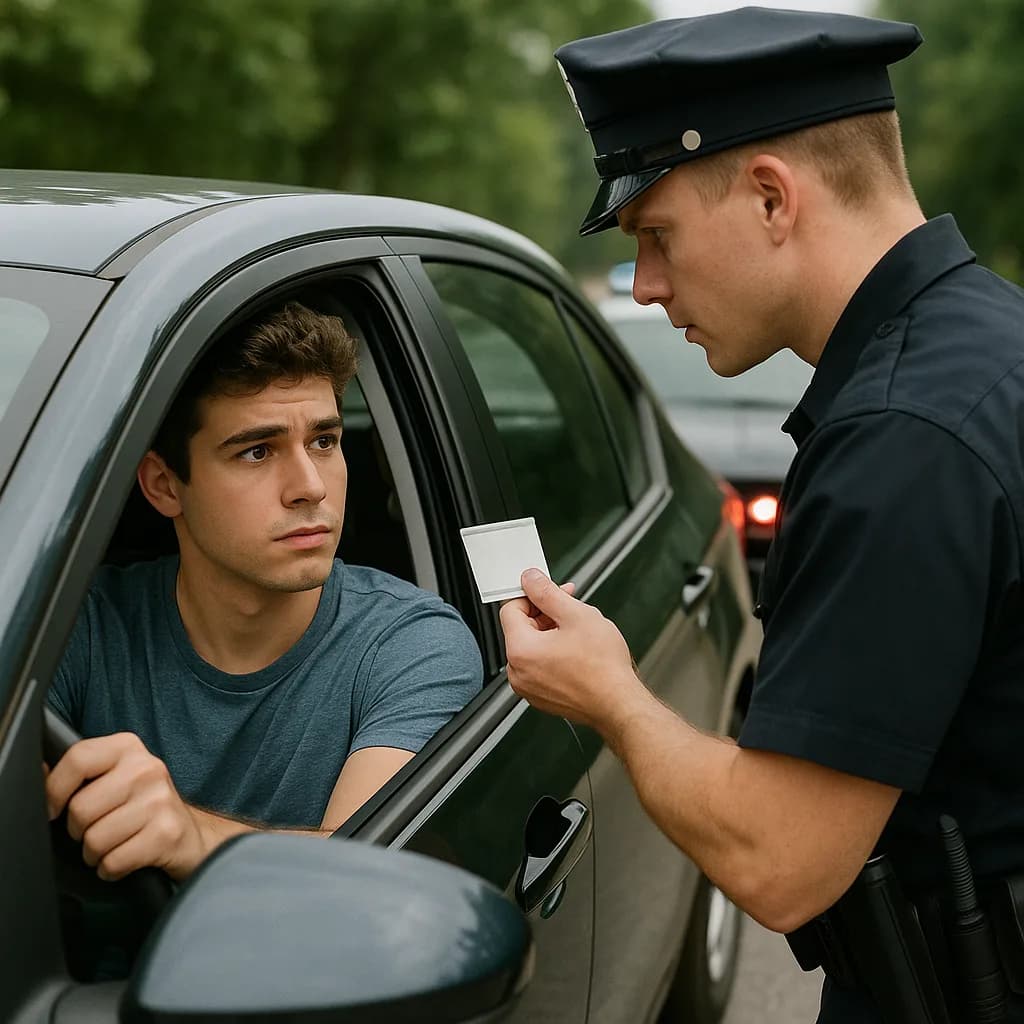
After an accident, law enforcement can request proof on the spot. Kansas statute requires you to show evidence of financial responsibility when asked — typically an insurance card, a bond certificate, a deposit receipt, or a self-insurance certificate. If you cannot produce proof, the officer issues a citation, and the Division of Vehicles opens a compliance review. You have 10 days to submit proof to the Division. The state does not accept retroactive proof to avoid the fee once suspension is ordered.
Related Articles





What Happens When You Switch Methods
Switching from insurance to a bond, or from a bond to a deposit, requires careful timing. Kansas treats any gap in financial responsibility as a lapse, even if you intend to substitute one method for another. If you cancel your insurance policy on the 15th and the bonding company files your bond on the 17th, the state records a two-day lapse.
The correct sequence: file the new method before canceling the old one. If you are switching to a bond, have the bonding company submit the filing to the Division of Vehicles, wait for confirmation the bond appears in the database, then cancel your insurance policy. The same logic applies when switching from a bond to insurance, or from a deposit back to insurance. Overlap is safer than a gap.
One exception: if you are moving out of state and surrendering your Kansas registration, you do not need to maintain financial responsibility after the surrender date. Notify the county treasurer you are returning your plates, confirm the registration is canceled in the system, then cancel your insurance, bond, or deposit. If you keep the registration active while living elsewhere, Kansas still requires continuous financial responsibility, and a lapse suspends your out-of-state registration privilege.
Kansas Reinstatement Fee
The fee applies even if the lapse was unintentional or lasted only one day. You must also provide proof of current compliance before reinstatement is processed.
Kansas Division of Vehicles reinstatement fee schedule
When Financial Responsibility Is Not Enough
Meeting the state minimums satisfies Kansas law, but it does not necessarily cover the full cost of an accident. The $25,000 per person bodily injury limit can be exhausted quickly if someone suffers serious injuries. The $25,000 property damage limit may not cover a totaled luxury vehicle or damage to multiple cars. If you cause an accident and the damages exceed your financial responsibility limit — whether that limit comes from insurance, a bond, or a deposit — you are personally liable for the difference. The injured party can sue you for the excess, and a judgment attaches to your assets and wages.
Kansas requires uninsured motorist coverage on all liability policies, which protects you when someone without financial responsibility hits you. That coverage does not apply if you chose a bond or deposit instead of insurance — you have no UM coverage unless you buy a separate policy. The same is true for personal injury protection: Kansas mandates PIP on insurance policies, but a bond or deposit provides no PIP benefits. If you are injured in an accident and you relied on a bond or deposit for financial responsibility, you pay your own medical bills unless you carry separate health insurance or a supplemental auto policy.
Compare Kansas Carriers and Costs
If you are meeting financial responsibility through insurance, Kansas has 25 carriers writing liability policies in the state, including standard, preferred, and non-standard options. Rates vary by driving record, vehicle, location, and coverage selections. Some carriers offer multi-vehicle discounts when you insure more than one car on the same policy; others specialize in high-risk drivers or non-owner policies for drivers without a registered vehicle. The state does not regulate premium amounts directly, so comparing quotes from multiple carriers is the only way to confirm you are not overpaying for the minimum coverage Kansas requires. Use the comparison tool to see which carriers write policies in your county and request quotes that meet the $25,000/$50,000/$25,000 liability minimums plus the required PIP and uninsured motorist coverage.