Kansas Requires PIP But Preserves Fault-Based Liability
You just renewed your Kansas auto policy and noticed a Personal Injury Protection (PIP) charge you do not remember seeing before. The carrier told you Kansas requires PIP on every policy, but a neighbor said Kansas is not a no-fault state. Both statements are true, and the confusion comes from Kansas operating a hybrid system that mandates first-party injury coverage while preserving your right to file a liability claim against the at-fault driver.
Kansas law requires every auto policy to include PIP coverage for medical expenses and lost wages after a crash, regardless of who caused it. At the same time, Kansas remains a fault-based state for property damage and allows you to pursue the at-fault driver's liability insurer for injuries that exceed your PIP limits or meet certain thresholds. The result is a two-layer system where PIP pays first for your own injuries, and liability coverage pays when you injure someone else or when another driver's liability insurer owes you compensation beyond what PIP covers.
Compare car insurance rates in your state
Get quotes from licensed carriers — no obligation, no spam, results in minutes.
Get Your Free QuoteKansas Minimum Liability Limits
$25,000 / $50,000 / $25,000
Kansas requires $25,000 bodily injury per person, $50,000 bodily injury per accident, and $25,000 property damage. These limits apply when you cause a crash and injure another driver or damage their vehicle. PIP is a separate mandatory coverage that pays your own medical bills first.
Kansas Insurance Department
What PIP Pays and What It Does Not
PIP covers your medical expenses, lost wages, and certain other costs after a crash, regardless of fault. PIP pays for hospital bills, doctor visits, rehabilitation, and a portion of lost income if the crash keeps you out of work. It also covers funeral expenses up to the policy limit.
PIP does not pay for vehicle damage. Property damage claims go through the at-fault driver's liability coverage or your own collision coverage if you carry it. PIP also does not cover pain and suffering, which can only be recovered through a liability claim against the at-fault driver if your injuries meet Kansas tort threshold rules.
The coverage applies to you, household members driving your vehicle, and passengers injured in your car. If you are hit by another driver, your own PIP pays your medical bills first, even if the other driver was entirely at fault. You can later pursue the at-fault driver's bodily injury liability coverage for expenses that exceed your PIP limit or for non-economic damages like pain and suffering.
Your PIP pays your medical bills first after any crash, even when the other driver caused it. You pursue the at-fault driver's liability insurer only after PIP limits are exhausted or for damages PIP does not cover.
When You Can File a Liability Claim Against the At-Fault Driver
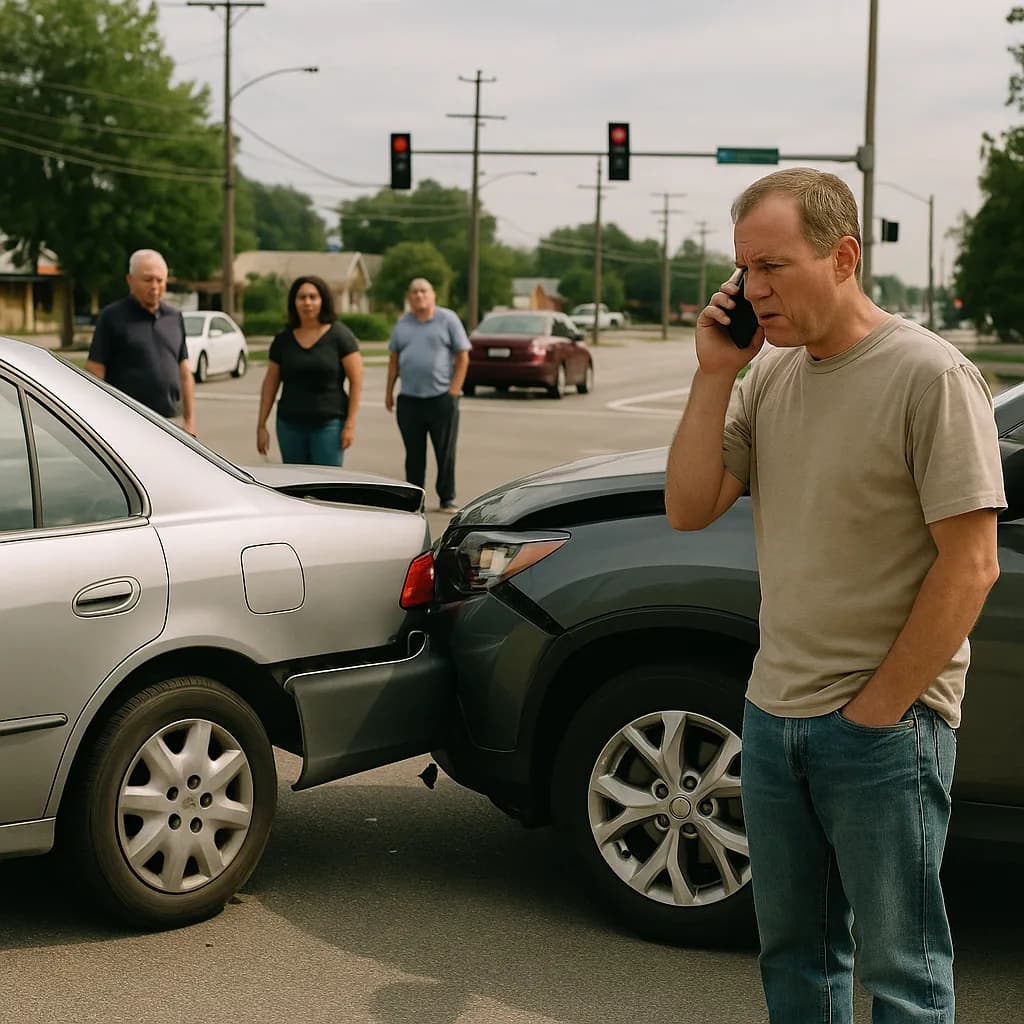
You can file a liability claim for medical expenses that exceed your PIP limit, for property damage to your vehicle, and for non-economic damages like pain and suffering if your injuries meet Kansas tort threshold rules. If your injuries do not meet these thresholds, you are limited to PIP benefits and cannot recover pain-and-suffering damages from the at-fault driver.
Property damage claims are always fault-based in Kansas. If another driver hits your car, you file a claim against their property damage liability coverage or use your own collision coverage and let your insurer subrogate. PIP does not pay for vehicle repairs, so the fault-based liability system governs all property damage regardless of injury severity.
Related Articles
How the Hybrid System Affects Multi-Vehicle Households
Every vehicle on your Kansas policy must carry PIP, and the coverage stacks when multiple household members are injured in the same crash.
When one household member causes a crash that injures another household member, the injured person's PIP pays first. The at-fault household member's liability coverage does not pay for injuries to other household members on the same policy unless the policy includes a specific household exclusion waiver, which most Kansas carriers do not offer. This structure makes PIP the primary injury coverage within a household, and liability coverage the primary protection against claims from outside the household.
Kansas Uninsured Motorist Rate
12%
Twelve percent of Kansas drivers carry no insurance. When an uninsured driver hits you, your PIP pays your medical bills first, and your uninsured motorist coverage pays for injuries that exceed PIP limits or for damages PIP does not cover. Kansas requires uninsured motorist coverage on every policy unless you reject it in writing.
Insurance Research Council, 2023
Coordinating PIP With Health Insurance and Liability Claims
Kansas PIP is primary, meaning it pays before your health insurance after a crash. You cannot choose to file through health insurance first to preserve PIP for future crashes. The law requires PIP to pay first for crash-related injuries.
When your injuries exceed your PIP limit and meet Kansas tort thresholds, you file a liability claim against the at-fault driver's bodily injury coverage. That claim can include the medical expenses PIP already paid, the expenses your health insurer paid, and non-economic damages like pain and suffering. If the at-fault driver's liability limit is too low to cover all damages, your underinsured motorist coverage pays the difference up to your UM policy limit. The sequence is always PIP first, then health insurance for amounts PIP does not cover, then liability or UM coverage for amounts that exceed both.
Choosing PIP Limits for Your Household
Households with high-deductible health plans or no health insurance benefit from higher PIP limits because PIP pays without a deductible and covers expenses health insurance might not, including lost wages and funeral costs. Households with comprehensive health coverage and low out-of-pocket maximums can often stay at the minimum PIP limit without significant financial exposure, because health insurance covers medical bills PIP does not.
The cost is lower than raising liability limits by the same amount because PIP pays only for injuries to people in your own vehicle, while liability covers injuries you cause to others. Compare the premium difference against your health insurance deductible and out-of-pocket maximum to determine whether higher PIP limits reduce your total exposure after a crash.
Compare Kansas Carriers That Write PIP and Liability Together
Not every carrier writing Kansas auto insurance offers competitive rates on both PIP and liability coverage. Some carriers price PIP aggressively but charge higher liability premiums, while others do the reverse. Households insuring multiple vehicles should compare total policy cost across carriers rather than focusing on a single coverage line, because the carrier with the lowest liability rate may not offer the lowest combined premium once PIP, uninsured motorist, and collision coverage are added.
Kansas law requires carriers to offer PIP and uninsured motorist coverage on every policy unless you reject UM in writing. You cannot reject PIP. When comparing quotes, confirm that each quote includes the same PIP limit, the same UM limit, and the same liability limits so the comparison reflects true pricing differences rather than coverage gaps. A quote that looks cheaper may carry lower limits or exclude coverages another carrier includes by default. Request quotes from at least three carriers that write multi-vehicle policies in Kansas and compare the total annual premium for identical coverage across all vehicles on your policy.